

Often, when offshore oil and gas or windfarm losses are discussed in the Insurance industry, large and complex construction claims come to mind, but this is only one aspect of the offshore construction world. For significant offshore oil and gas reserves, on average it takes in excess of five years from discovery to production.
This period is made up of feasibility studies, front end engineering and design before the final investment decision and then engineering, procurement and construction can finally begin. Subsea equipment is usually involved every step of the way, from completing feasibility surveys to assisting installations, and monitoring drilling operations to performing maintenance and repairs.
This article will cover some common types of subsea equipment and what they do, in addition to the risks they face in operation and the types of claims these operations can result in. Regularly occurring causes of loss are also discussed and the challenges that are faced in policies regarding the most frequently occurring causes of loss.
Some of the most common types of subsea equipment which are used in offshore construction includes remotely operated vehicles (ROVs), autonomous underwater vehicles (AUVs), acoustic doppler current profilers (ADCPs), sub-bottom profilers and several variations of towed sonar equipment. The aforementioned equipment have a variety of different applications, ROVs are used for completing a range of operations, activities and inspections, often replacing conventional divers. Similarly, AUVs are commonly used for inspection work and have the advantage of not requiring to be tethered to a vessel like ROVs but typically have limited functionality in terms of physical activities. ADCPs measure current in a water column and sub-bottom profilers work to map structures beneath the seabed. Sonar can be used in many different configurations and therefore has an extensive range of applications.
Typical subsea equipment claims include: equipment lost to the seabed, becoming tangled or caught both in attached tethers or umbilicals and in external equipment such as fishing nets, equipment being lost whilst in storage, and very commonly, mechanical and electrical failures. Often, heavy weather is a contributing factor to offshore losses, weather forecasts can be misinterpreted or the severity of the forecasts misjudged. We have also seen cases where weather forecasts have been inaccurate and this contributed to the loss of equipment. Human factors also frequently play a part in subsea equipment losses however while human factors may assist in creating the circumstances for the loss, they are often not the concluded to be the proximate cause.
Many subsea equipment policies have exclusions for electrical and mechanical breakdown, which is a common occurrence, however this exclusion can and has been interpreted in different ways. In most cases that we have come across, the machinery breakdown exclusion applies to the individual part which failed and is not intended to exclude consequential damage on the basis that one part or connection failed. The interpretation of the clause is made on a case-by-case basis which often leaves Insureds eager to confirm coverage and anxious in their wait. In comparison to dealing with Insureds on an offshore construction project, owners and operators of subsea equipment tend to be relatively more exposed to their losses which brings additional pressures to resolve claims quickly.
Another common theme with subsea equipment losses is the need to consider the ’Mysterious Disappearance Clause’, which excludes unexplainable missing equipment and is common among many different types of insurance policies. We see that the documentation for equipment, which is often heavy and requires machinery to move, is not sufficient to pinpoint when or where equipment was lost which leaves avenues for recovery an unlikely possibility. It is often up to the Insurer to take an opinion based on the particular circumstances of the case, which again can leave Insureds eager to have coverage confirmed early in the claims process.
In many parts of the world, it may be surprising to note that if equipment is lost to the seabed and it is not financially practical to recover it, it can simply be left. The absence of clear regulatory guidance in some territories makes way for complex situations when lost equipment that has been abandoned is found by a third-party or causes damage to third-party equipment. We have seen situations where claims for lost equipment have been settled by Insurers when a third-party recovers the equipment and seek compensation in exchange for returning the damaged equipment to the Insured.
There are many ways in which Insurers mitigate their exposure including not accepting ownership or liability for lost equipment once a claim is settled. Furthermore, there are several conditions precedent to liability for underwater equipment which may include that applicable equipment must be fitted with some form of acoustic beacon to be able to locate any lost equipment, such as an ultra-short baseline (USBL) system. A USBL is a method of underwater acoustic positioning which is exceptionally accurate, however identifying the location of lost however does not guarantee a recovery, often due to the financial practicality. Also, any attempt made at recovery is often dependent on the battery life of the USBL and the ability to still be able to locate the equipment once recovery operations are organised and underway. Many other factors affect recoverability including water depth, currents moving the equipment from any last known position and ability to charter vessels in a reasonable timeframe.
Insurance policies are intended to protect Insureds against unforeseen and unfortunate events which result in financial losses, but as described above also protect Insurers from unlimited liability and reckless behaviour. Due to the challenging nature of the subsea equipment’s operating environment specialist wordings have been developed for this niche class of business and these wordings continue to evolve with the industry. Adjusting claims arising from these operations required a detailed working knowledge of the specialist equipment, the offshore environment and a thorough understanding of the Insurance wordings.
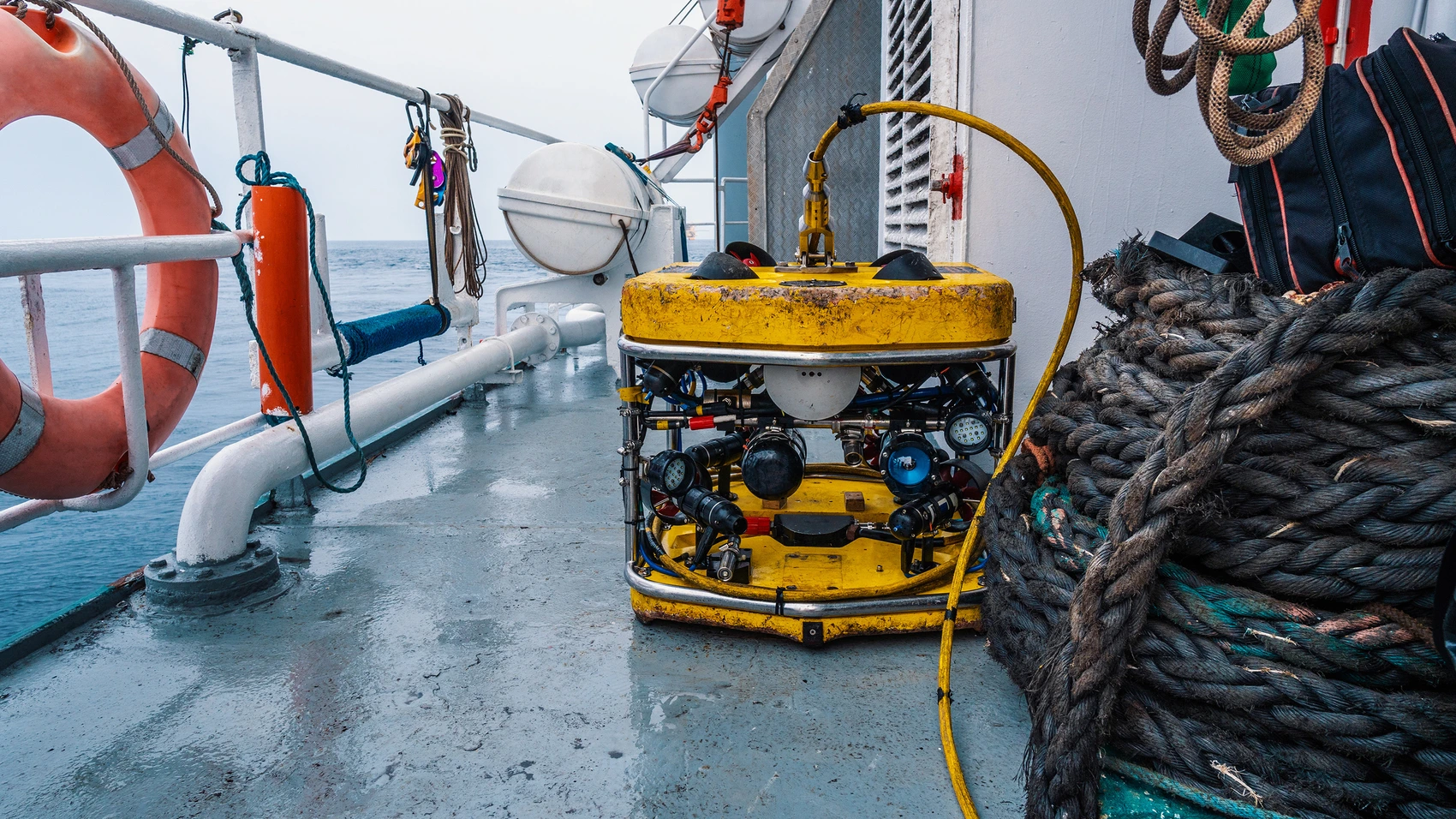
A typical ROV aboard an offshore vessel

Emily Spellman
Assistant Engineering Adjuster, Natural Resources
emily.spellman@charlestaylor.com

