

Charles Taylor Adjusting Natural Resources (Middle East) Senior Adjuster Louis-Florent Daspre (LFD) talked to Jack Wishart (JW), VP Risk Engineer, Marsh Specialty, Dubai, to discuss the 27th edition of Marsh’s 100 Largest Losses document and his insights on the major energy property losses from the last two years. Jack is the author of the 26th and 27th editions of the 100 Largest Losses report.
LFD: Jack, could you summarise the intention of the Marsh 100 Largest Losses report and what it contains?
JW: The 100 Largest Losses in the Hydrocarbon Industry (100LL) is a publication that Marsh has produced since the mid-1970s. It details the largest property damage losses in the hydrocarbon industry and notes emerging risk trends. The loss amounts include property damage, debris removal, and clean-up costs but don’t include costs related to business interruption, extra expenses, workforce injuries/fatalities, and any liability claims. Marsh’s primary aim with the 100LL is to help raise awareness of major losses and share their associated learnings across the industry in order to help avoid losses from occurring in the future.
LFD: The data gathering process for such a large and extensive review must be a challenge. How is this conducted?
JW: The data is drawn from Marsh Specialty’s loss database, and we apply cost indices to adjust values, to allow like-for-like comparison of losses that have occurred years apart. We consult with insurers, loss adjusters and energy companies themselves on the new losses. Agencies such as the US Chemical Safety Board, and the Health and Safety Executive in the UK, are excellent resources when it comes to understanding the root causes of major incidents.
As part of our ongoing commitment to data integrity, we complete a detailed review of all the historic entries with support from numerous industry stakeholders. In particular, our thanks go to Liberty Specialty Markets for their insights and assistance in updating historical loss data.
LFD: The previous 26th edition was released in March 2020. What are some of the trends or changes you have witnessed since that time that are reflected in this 27th edition?
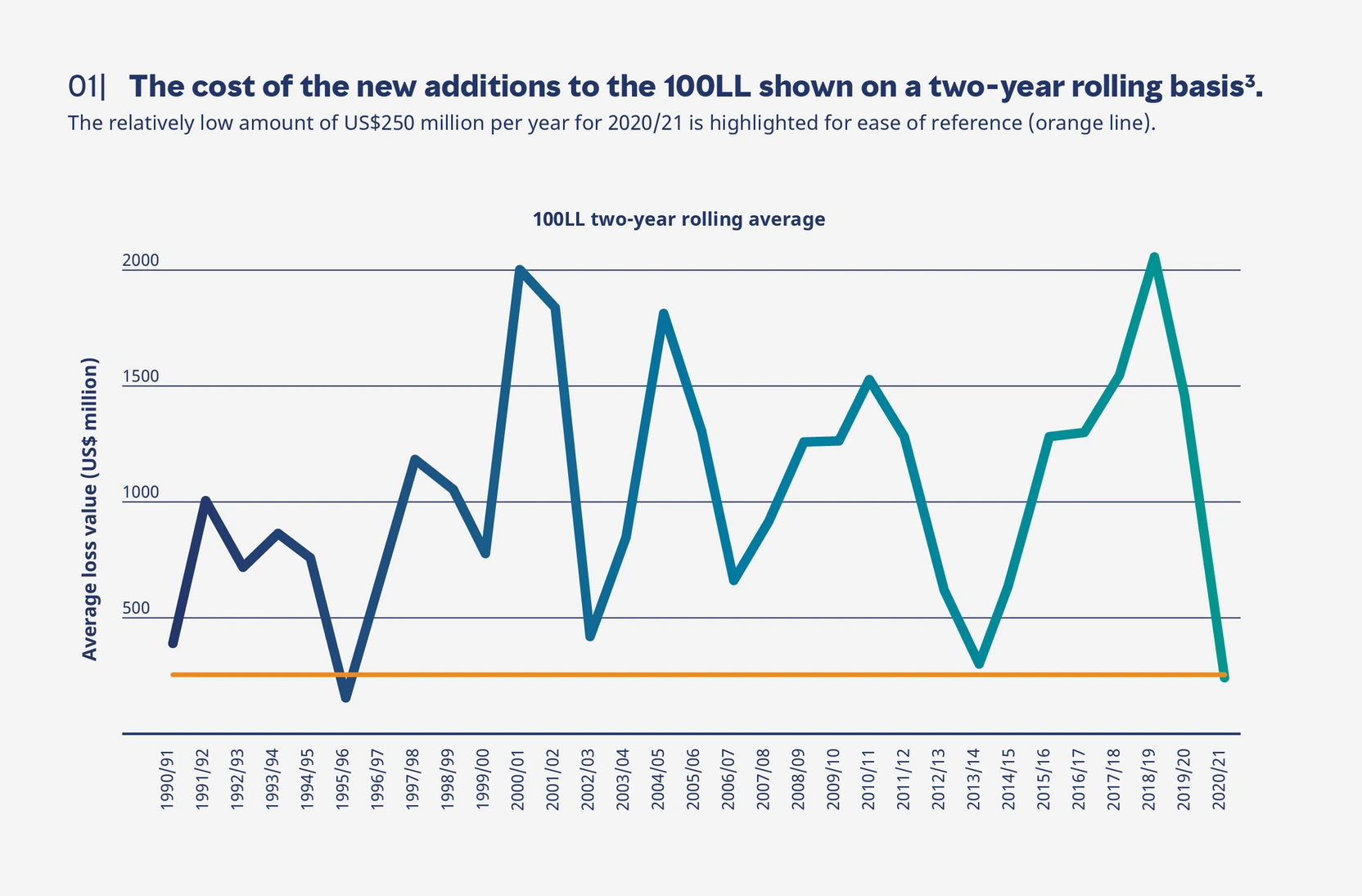
JW: The most obvious trend from the last two years is how few major losses there have been globally. There were just two new additions to the 100LL: a fire and explosion at a South African oil refinery that cost an estimated US$200 million, and a fire at a gas processing plant in Norway which is estimated at US$300 million. To give you some context, this equates to the lowest average amount for any two-year period recorded in the report since 1995/1996. The graph below shows that this is in sharp contrast to what we have reported in our previous three editions.
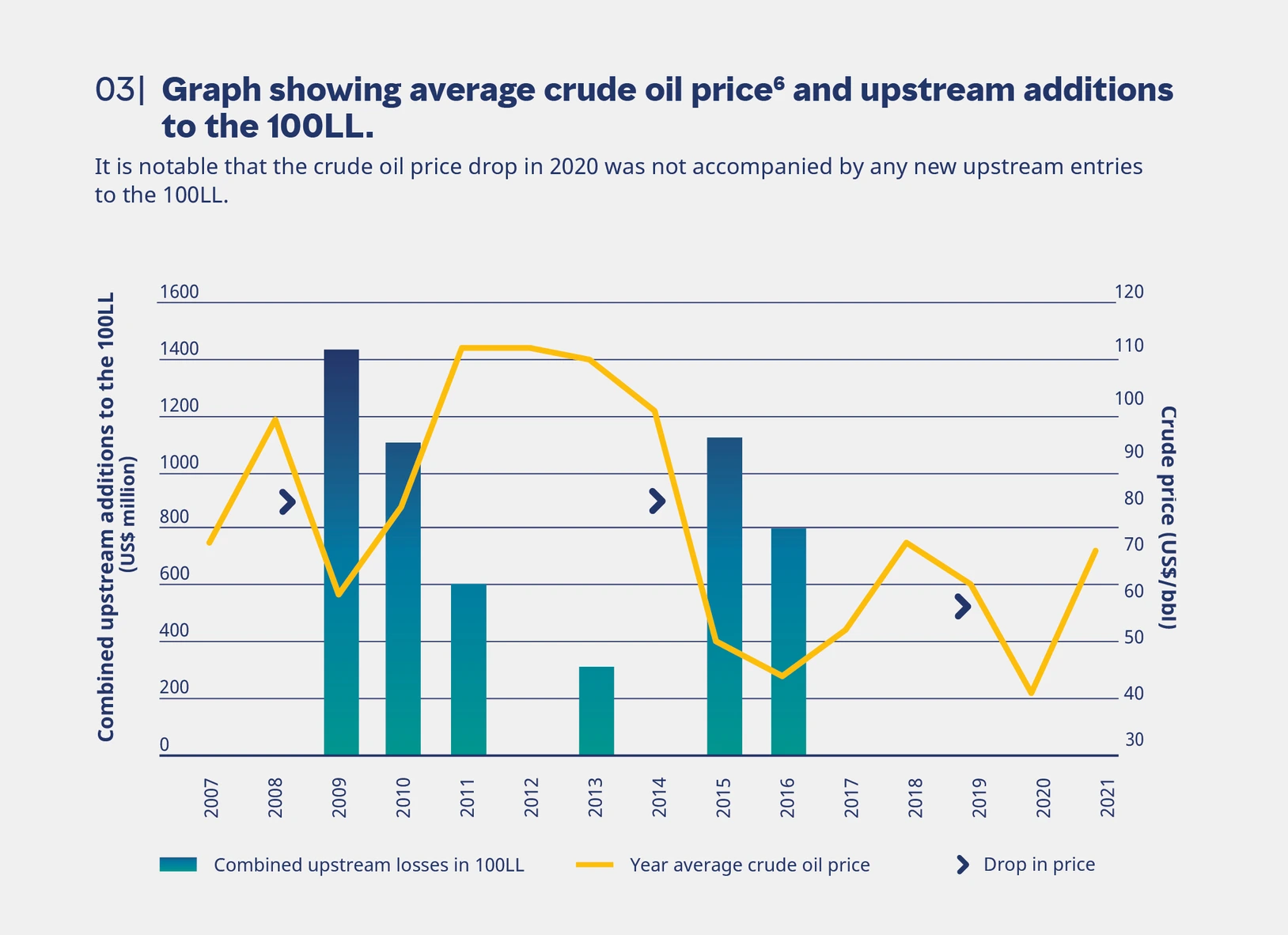
A notable point is that the most recent upstream sector loss in the 100LL occurred back in February 2016 (Jubilee Field, Ghana). The five years since mark the longest period without an upstream addition to the 100LL ranking since the period 1993 to 2001. This is particularly interesting given the reduction in crude oil price in 2020. The last two major drops in crude oil price, in late 2008 and 2014, were both followed by several large property damage losses in the upstream sector however, this did not materialize in 2021 (see below).
As part of our analysis, we also highlight incidents that may not qualify for the 100LL ranking. These incidents indicate emerging risks or recurring process and operational deficiencies. In this report, we look at the potential impacts of cyberattacks, extreme weather events, and the ammonium nitrate explosion in Beirut.
LFD: That’s an interesting development to see only two new entries this time around. Why do you think that is?
JW: A big factor may be the COVID-19 pandemic - the fact that operations were scaled down, and how operators adapted and responded to the mandated safe work measures. I think the energy industry should certainly be commended for how it managed this most difficult of periods, but there may be some longer-term risks for the industry to consider. The challenge now is to ensure that the “new” risks, for example, from deferring key maintenance and inspection work, are successfully managed to avoid a number of “delayed losses” over the coming years.
LFD: Lastly Jack, how can the readers access the most recent edition of 100 Largest Losses?
JW: The publication is freely available from the Marsh website and I would encourage anyone in the industry to read it and learn from the historic losses.

Louis-Florent Daspre
Senior Adjuster – Natural Resources, Middle East
louisflorent.daspre@charlestaylor.com
EXPERTISE:
Onshore Oil & Gas, Downstream Refinery/Petrochemical Operations, Offshore Construction and Processing, Business Interruption, Construction/Erection All Risks, Power Generation & Utilities
LOCATION:
Dubai

