

ISSUE 4, JUNE 2023

Alan Morton
Senior Client Director
E: alan.morton@charlestaylor.com
It is my pleasure to welcome you to this fourth issue of Elements, the Charles Taylor Adjusting Natural Resources newsletter.
I joined Charles Taylor in April 2022 after a lengthy career in Claims broking. It is with this perspective that I make this introduction, and offer perhaps a different view on the newsletter.
Since joining, I have been hugely impressed not only with the professional culture within Natural Resources, but also the depth of technical excellence in a sector that has historically been at the cutting edge of innovation. This is especially true as we progress through energy transition, and this helps explain some of the renewable content of this Elements issue number 4.
We have contributions on green hydrogen from Andrew Milne, together with Kayaneh Mouradian and Sophie Shiffman from Clyde and Co; and an insight into the energy market in Brazil from Manuel Tarantino.
Mike McMahon and James Buckwell explore the developing market for Floating Storage and Regassification Units.
We re-visit two previous areas of interest being battery storage from issue 3 (Chris Brown looks at topical issues); and lightning damage to wind turbines from issue 2 (a Wind Power Lab contribution on lightning protection).
We also include a fascinating summary of the Japan steel works scandal that broke in 2022.
We hope there is something of interest for everyone.
However, contrary to precedent, this issue starts with an introduction to the culture of Natural Resources, how we approach our work and our ambitions for our clients. We characterise this as our Value Proposition.
I very much hope you enjoy this fourth edition of Elements. If you have any feedback or suggestions for future content, please do share your thoughts with me or any of the authors in this issue.
Elements 2023 Value Proposition
In a departure from previous contributions, we have taken stock of our activities and reminded ourselves of our overall ambitions as loss adjusters.
We are a global firm, working in diverse regions of the world. However, our culture is consistent globally and we feel it is worthwhile reminding ourselves of our core values. In doing so, we help to promote consistency of approach and accountability for what we do.
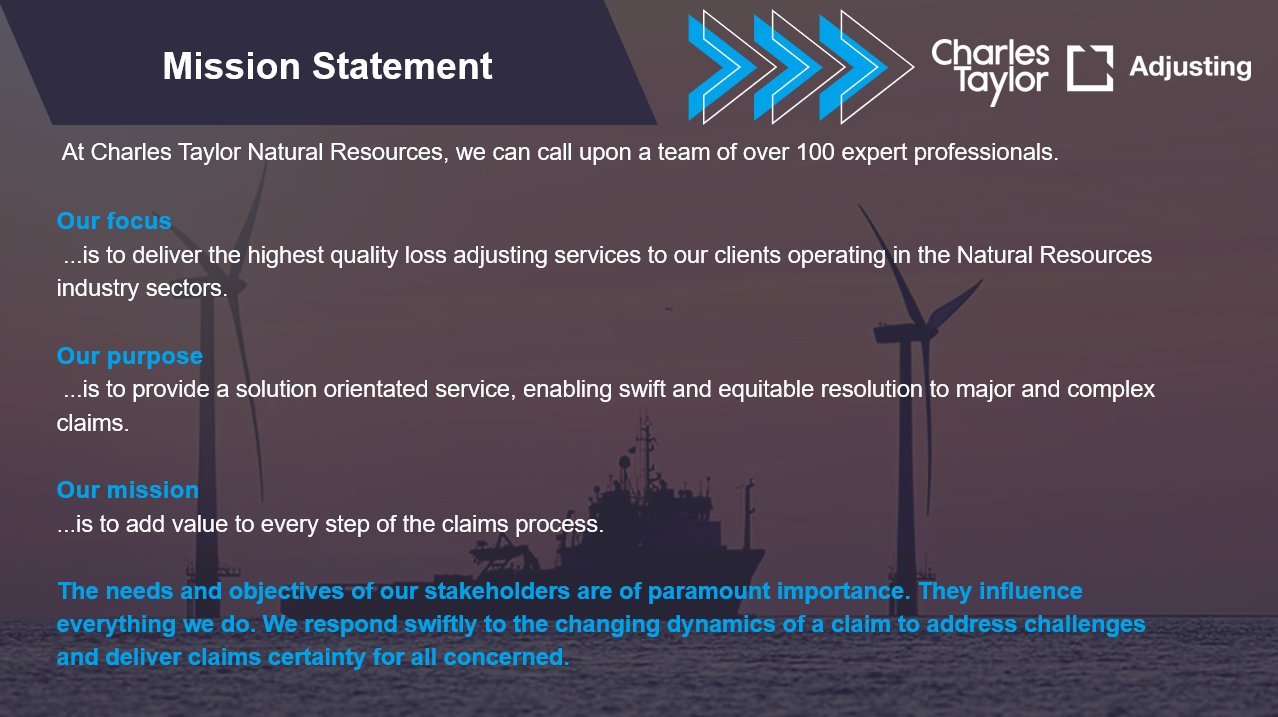
Our Value Proposition includes a Mission Statement, stating our overall objectives; a set of Universal Principles, for consistency of approach; and a Service Level Pledge to enable accountability for what we do.
In reminding ourselves of our culture, we remind our clients of it also. We are committed to being relevant and will continually listen to our clients and stakeholders.
Please feel free to let us know how we might improve.

Article 01
Green hydrogen and associated adjustment/ insurance considerations
In this article we discuss some of the main challenges of insuring green hydrogen projects and key considerations for parties placing these risks. Of course, given the nascent stage of the hydrogen industry at the time of writing, much of the commentary is based on anticipated risks, and our transferable experience in other power/renewables sectors.
Article 02
Japan Steel Works: The impact of falsified data on underwriting and claims handing
A major supplier to the power generation industry recently announced that it repeatedly falsified inspection reports for its forged products over a 24-year period.
Article 03
Lightning Risk to Wind Turbine Blades: Acting as a Prudent Operator
Lightning-related blade damage is creating more challenges than ever in the wind industry. As the global wind turbine fleet expands into new territories and more manufacturers enter the market, lightning-related issues remain an ever present risk to wind energy-generating assets.
Article 04
An analysis of the Brazilian energy market
Between 2012 and 2016, Brazil experienced a major boost in investment, driven mainly by government policies. The oil & gas sector and its peripheral industries greatly benefited from investments with projections indicating that the country would finally reach its full potential as global player in the energy sector.
Article 05
Developing market for Floating Storage and Regassification Units
Demand for liquified natural gas (LNG) continues to rise and natural gas is on track to overtake oil as the world’s primary source of energy by the middle of the next decade. Some of the required infrastructure in the LNG value chain is costly and time-consuming to build, but there are alternative options.
Article 06
The pluses and minuses of battery energy storage systems
Demand for electricity is rising along with the need for cleaner energy production. Renewable energy sources such as wind and solar PV are green, proven and scalable, however their variable output and reliance on weather conditions creates challenges when integrating them into the power grid.