Lightning-related blade damage is creating more challenges than ever in the wind industry.
As the global wind turbine fleet expands into new territories and more manufacturers enter the market, lightning-related issues remain an ever present risk to wind energy-generating assets. Exploring the causes of lightning attachments to blades, knowing
the factors that contribute to them, reviewing and understanding lightning protection system (LPS) components, and appraising methods for minimising lightning related damage are critical for all wind turbine insurers, owners, and operators.
The value of lightning diverters
As a wind turbine blade rotates, its aerodynamic shape, surface condition and additional surface components determine the airflow patterns around the blade. The closer to the tip of a blade, even a perfectly smooth blade, the more complex the airflow becomes (See Figure 1, below) and this complex flow creates difficulties for the lightning protection system. In order for the LPS to be effective, lightning has to follow a path of ionised air to the blade lightning receptor and so they are positioned close to the blade tip. The reason for this is that the tip is themost electrically attractive part of the blade but the lightning still has a difficult task in finding a well-defined path of ionised air due to the complex airflow. This situation can lead to lightning strikes near the tip but critically not at the receptor which can cause damage to the blade. Lightning diverters installed near the tip can create a powerful ionised path toward the receptor, reducing the likelihood of this type of damage.
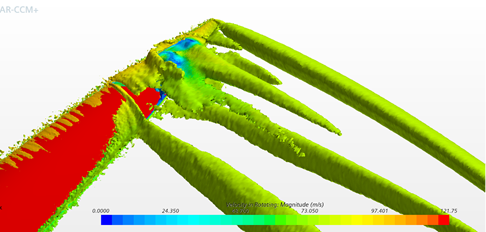
Figure 1. CFD analysis of turbulence at the end of a blade. (Courtesy of PowerCurve ApS)
Environmental factors
Wind turbine blades are subject to a variety of environmental factors that can cause the surface of a blade to degrade and become contaminated over time by such mediums as erosion, ice, dirt, bugs, etc. Numerous studies indicate that a degraded blade surface causes a reduction in turbine output power. In other words, wind turbine output power can be fundamentally seen as a measure of the relative quality of the airflow over the blade surface. Any reduction in power is an indication of sub-optimal, or what one might consider ‘dirty’, air flow over the blade. The dirtier the flow, the harder it will be for lightning to find a path of ionised air to its target and therefore the more likely it is to strike the blade at an unintended location
Understanding wider threats
It is also important to understand other factors relating to lightning strike point. The aerodynamic shape of the blade, possible water encroachment from plugged drain holes, the lightning polarity etc are all significant influences on lightning attachment to blades.
When the lightning attaches to the receptor, it enters the lightning protection system. LPSs are passive lightning protection solutions installed by all modern manufacturers with the goal of ensuring that lightning strike energy hitting the blade is transferred safely to ground.
When do blade lightning receptors fail?
The blade lightning receptor is designed to attract lightning and transfer the energy to the down conductor. Made from an erosion resistant metal, the receptor is a replaceable component that is mounted post-blade production. Risks of failure arise from worn receptors or broken connections to the down conductor possibly as a result of fatigue. The wear mechanisms include erosion of the receptor base from multiple lightning attachments and corrosion from water ingress around the receptor. The design of the down conductor cable varies between manufacturers with numerous options including copper mesh, solid copper cable, or linked aluminum plates. The down conductor is usually centered on the structural shear web inside the blade, located on either the leading edge or trailing edge side. It is cast into the blade during production.
Reducing risk
The risk of lightning damage can be reduced by conducting regularly scheduled tests and visual inspections of the LPS. Receptor wear and sealant damages can be observed during a standard external inspection, while the down conductor resistance should be measured with a low-resistance ohmmeter and physically examined during internal blade inspections.
Unfortunately, we don’t have control over adverse weather events like lightning. The exact location and strength of lightning is unpredictable, but it is detectable. Real-time detection of lightning events can allow operators to inspect for potential damage immediately after the storm. Determining this damage when it occurs is vital to minimise long-term damage that will inevitably have a wider negative impact with blade and tower failures.
Proactive management
Consider that a lightning strike occurs and damages a blade in a site that has only recently had its regular maintenance check via drone or in person – it could be up to 12 or 24 months before the damage is identified. The damage worsens, escalating over time, leading to the failure of the entire blade. In worst case scenarios, the entire tower may be affected or indeed destroyed during a catastrophic failure event e.g.there are documented instances where a blade has separated from a wind turbine due to exposure to a lightning strike.
In order to prevent this scenario, the wind industry can benefit from utilising accurate local lightning detection data when predicting lightning damage. In addition, installing lightning sensors on turbines can indicate exactly when lightning hits a specific turbine. This real-time monitoring allows operators to immediately focus inspection and repair where it will have the most impact.
How can you control your lightning related blade damage risk?
First, ensure that the leading edge and other critical surfaces of your blades are in good and clean condition. Secondly proactive testing and inspection of the installed LPS systems as part of annual inspections should be a prudent course of action open to all operators. Finally the installation of lightning diverters, aerodynamic upgrades and the real time monitoring of lightning event are all realistic options to minimise the potentially costly effects of a lightning strike.
With any questions or comments, please reach out to:
Joel Saxum – Wind Power LAB
Contributors:
Allen Hall & Valerie Hall - Weather Guard Lightning Tech - https://weatherguardaero.com/
Nicholas Gaudern - Power Curve ApS - https://powercurve.dk/
Matthew Stead - PING Services Pty Ltd - https://ping.services/
Morten Handberg - Wind Power LAB ApS - https://windpowerlab.com/