

This is the first of two articles to look at recent developments in mining technology. This first article focuses on the relatively well-tested technology being deployed in mining plant and machinery. The second article will follow later in 2025 and provide more focus on state-of-the-art technology driven by developments in Artificial Intelligence.
The mining industry has a history stretching over thousands of years and it has seen all manner of innovation and development during that time.
From its localised beginnings as a means to get the raw materials needed for tools, ornaments and jewellery, it has become a global industry worth trillions of dollars. Miners have moved on from primitive methods such as the fire-setting that was used from prehistoric time to the Middle Ages, and they now employ state-of-the-art lasers and scanners in their work.
Mining often takes place in harsh and remote environments, and technology is helping to overcome these challenges and make work safer and more productive. Here, we explore how automation and Artificial Intelligence (AI) are making an impact.
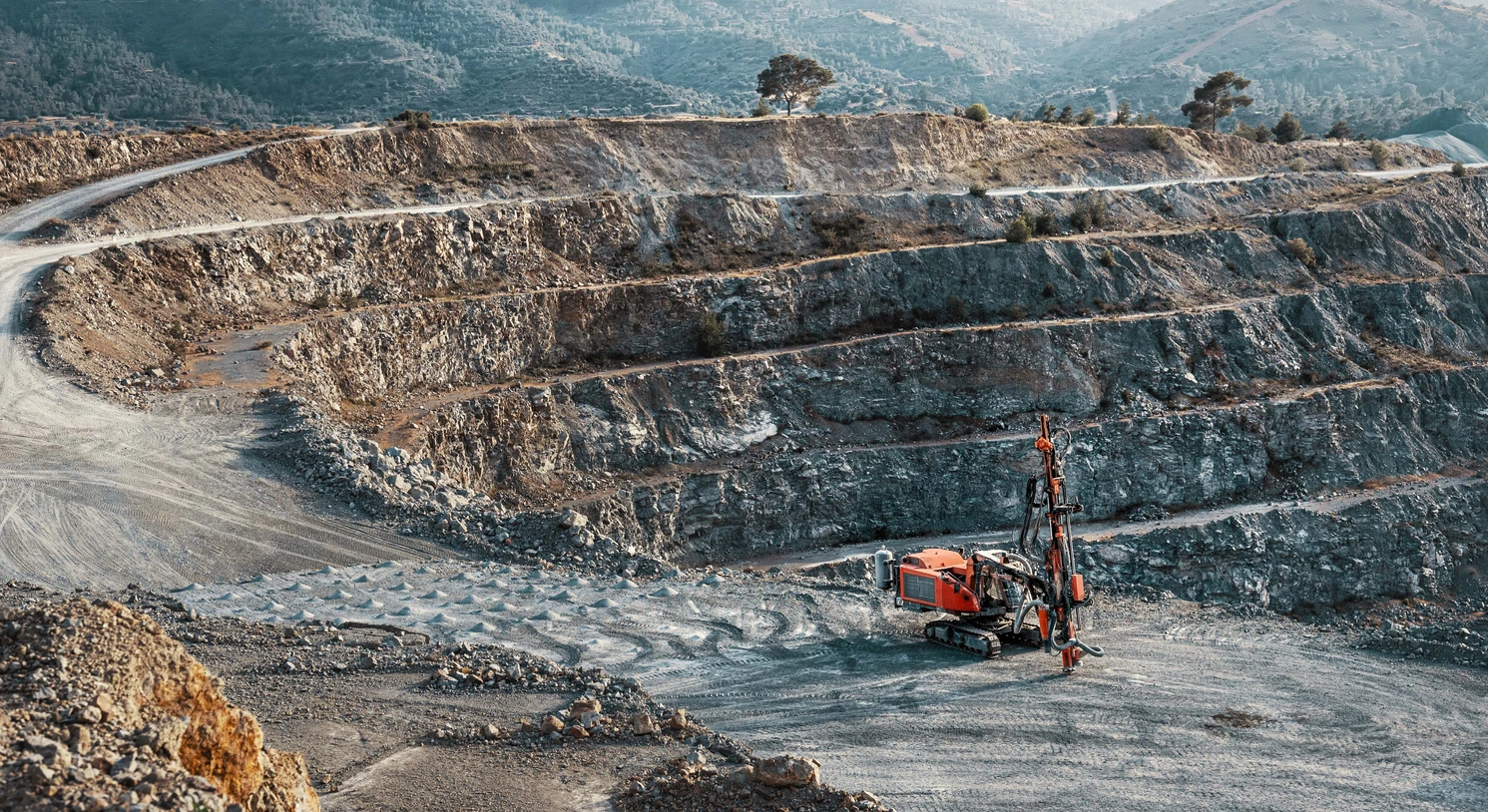
Interaction between the autonomous haul trucks and a manually operated excavator at Roy Hill (source: Engineering and Mining Journal)
Autonomous haulage systems
In the past seven or eight years, autonomous mining in its various guises has become more prevalent. This is particularly true amongst the largest mining companies that have the resources to make the capital investment required and the scale of operations to generate the return on investment needed to make it economically viable.
A good example of autonomous mining is the Roy Hill iron ore mine in Western Australia’s Pilbara region. In 2023, it became one of the first to transform its entire fleet of 96 conventional haul trucks to driverless operation and implement an Autonomous Haulage System.
The trucks run 24/7 in an autonomous operating zone, interacting with two excavators and ancillary vehicles.
The system is centrally controlled from within the mine through a wireless network that integrates the onboard vehicular controllers with high precision positioning, assisted by AI for obstacle detection and avoidance. The trucks use pre-defined courses to move material more efficiently and safely, increasing productivity.
What could go wrong?
In early 2024, in an open pit coal mine in Queensland, Australia, an autonomous haul truck hit a manually operated excavator. This was due to a loss of communication in the autonomous circuit which required a system reset.
During the outage, the operator of the excavator grounded the bucket and exited the cab. After the network was restored, the autonomous truck that was near to the manually operated excavator continued reversing and hit the excavator’s grounded bucket.
Assessing liability in such situations is an area of ongoing evolution. It no longer relies solely on analysing the actions of involved individuals and outside influences, and calling upon mechanical engineers to assess if and how machinery might have failed. These remain important factors, but now specific technological expertise is also required to determine if there was a failure in the software or hardware supporting the autonomous machinery. The ability to call upon the specific expertise required for complex automation and AI losses in the mining sector is something that will differentiate loss adjusters over the coming years.
It's also worth noting that not all such losses will result in claims. If the equipment is owned by a contractor, unless subject to a dry-hire agreement, they’ll likely have a plant and equipment policy against which they might make a claim. If the equipment belongs to the mine owner, their all risk policy is likely to have high deductibles and so would only respond in situations where the loss breached these. Even then, the owner may prefer to absorb the loss on its balance sheet.
Tele-remote loading
Another rapidly advancing space is tele-remote loading (also known as bogging) in underground mining. Load–haul–dump machines are used for loading blasted material onto trucks or shafts.
Loaders tend to be located in harsh environments and might, for example, be 500 metres underground. Instead of operators sitting in the cab of the loader, they can now control them remotely from a station on the surface. This takes the operator away from a dangerous and unpleasant environment and enables the machinery to operate non-stop.
AI comes into the equation through the video analytics required to provide collision alerts and detect if an operator has become distracted. It also recognises pile target positions to load more material and use less energy.
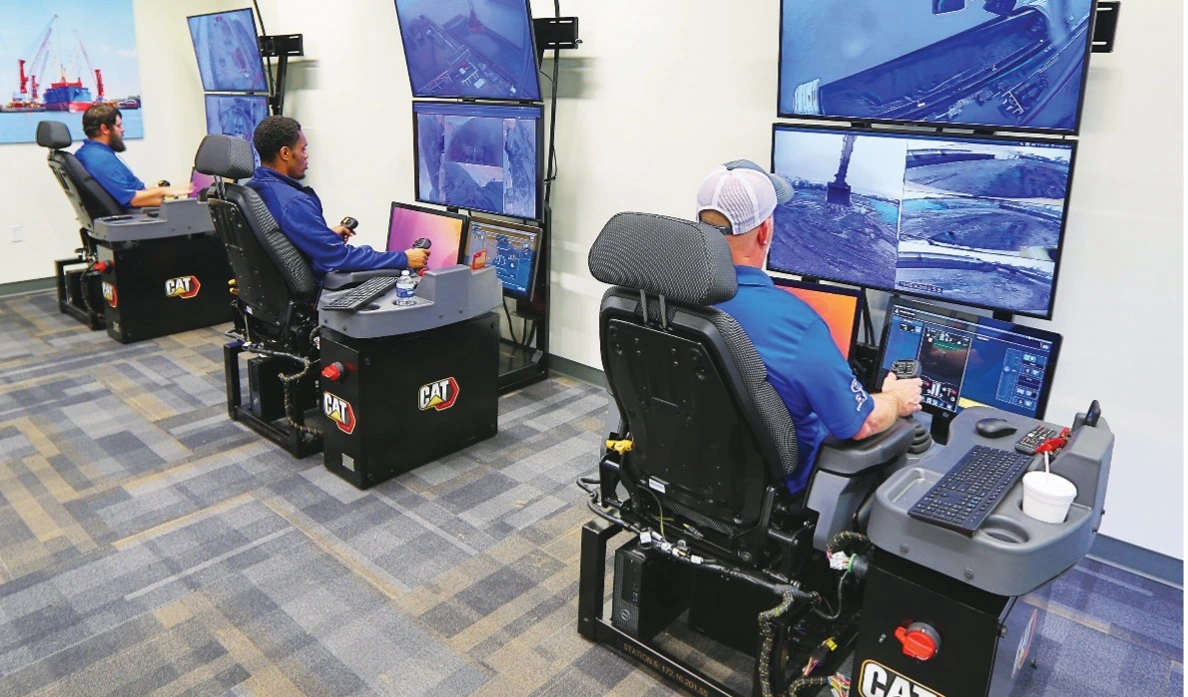
Control Stations to remotely control loaders and excavators (source: www.cat.com)
What could go wrong?
Rockfall is an inevitable risk in underground mining, especially in unsupported ground (i.e. areas that do not have some sort of structure in place to reinforce them). Discontinuities in rock mass are a major cause of such falls, creating unstable blocks of rock that then collapse with little or no warning.
The damage caused by rockfalls to tele-remote loaders is a common loss in the mining industry. They can completely bury a remotely controlled loader under hundreds of tonnes of material in the matter of seconds.
A typical mining plant and equipment policy provides cover for loss of machinery due to rockfall. But the risk profile associated with this loss has changed because remote operators take greater risks when controlling the equipment remotely.
This has been reflected in recorded losses and underwriters have introduced higher deductibles for those that occur during remote operation (see boxout one). These higher deductibles were not a feature of the market three or four years ago, but they have become increasingly common.
In addition, underwriters will limit the cover for recovering a buried loader and seek to cap it at the value of the machinery. If a decision is made to abandon the loader, it has to be verified by an independent party (see boxout two).
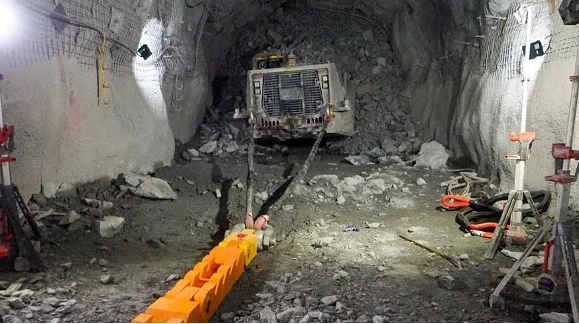
Attempted recovery of a buried loader using a Mining Extraction Device (MED) (source: www.elphinstone.com)
Last word
The introduction of automation and AI has had a significant impact on operations in the global mining sector – particularly within some of the biggest mines run by the largest owners and contractors.
It has changed the risk profile of certain operations and seen underwriters respond with new wordings and limits. Similarly, it has changed the nature of skills needed to adjust claims and bring them to a successful resolution.
The mining industry many date back millennia, but it’s as modern and forward thinking as any industry covered by the insurance market.
Deductible
- AUD 100,000 any one event
- Abandonment Claims: 10% of the loss or AUD 250,000 each and every occurrence whichever is the greater
- Remote Bogger Claims (whilst in remote mode underground): 10% of the loss or AUD 250,000 each and every occurrence whichever is the greater
Abandonment
The Insurer agrees to indemnify the Insured in the event of any loss, Damage or liability with respect of a Machine below ground, which cannot be retrieved because of any one or more of the following:
- The danger associated with the recovery operation of the Machine:
- as verified by a Mining safety consultant appointed by the Insurer; or
- in the event that the Insured disputes the opinion of the mining safety consultant, the Insurer will accept the opinion of a statutory authority (such as the Department of Mines or a Government appointed representative) or the relevant Mine Owner);
- If the Insured (or any third party assisting with the retrieval the Machine) is unable to access the Machine for the purposes of recovery
- Where recovery of the Machine is prevented by a Mine Owner or any other party who has the relevant authority to prevent access to the Machine or recovery of it; or
- If the costs of recovery of the Machine exceeds the amount that would otherwise become payable under the policy had the Machine been retrieved

