
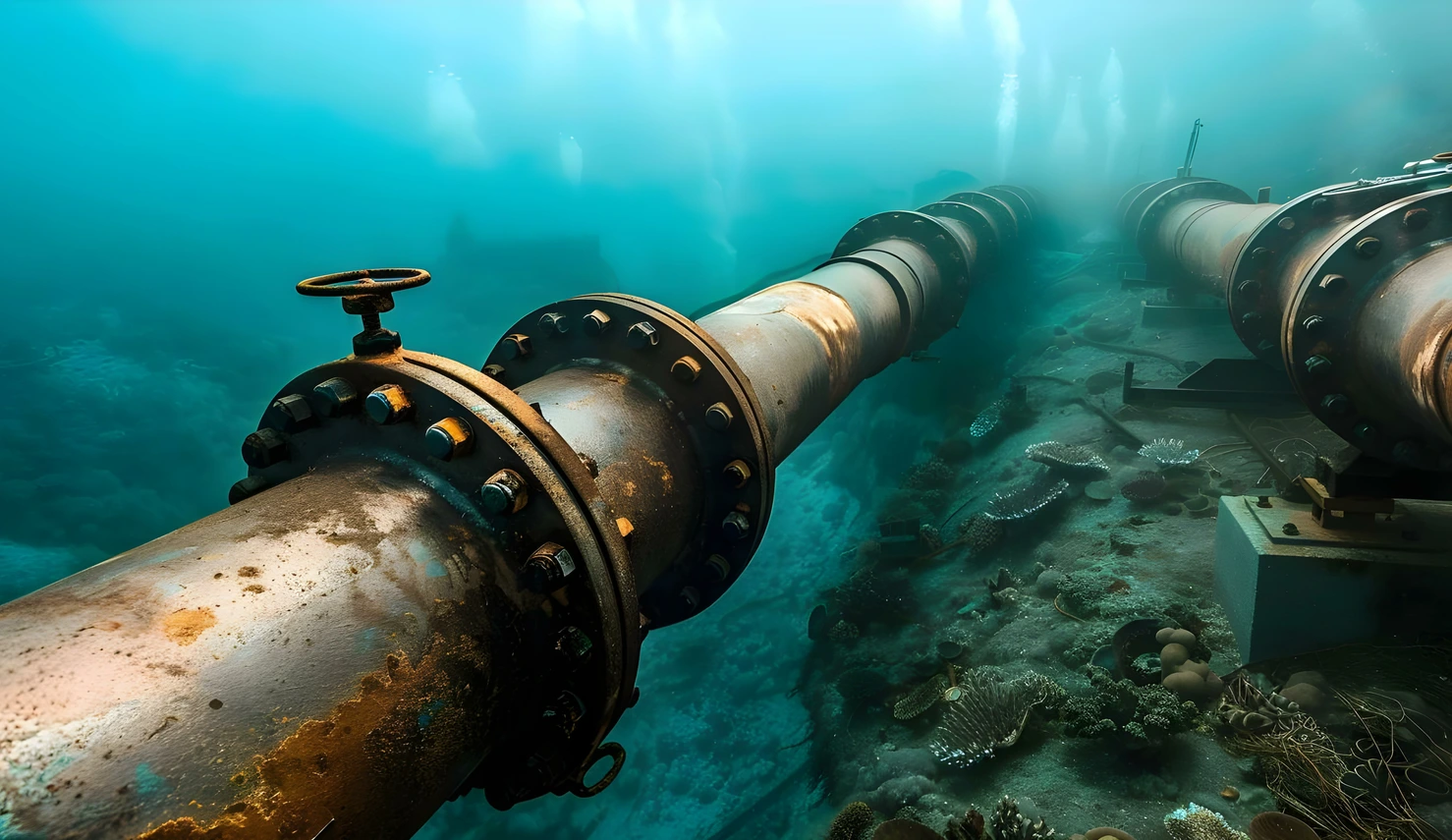
Subsea pipelines serve as underwater arteries for petroleum developments. They transport oil, gas and other produced fluids from wells to production platforms and then on to a variety of onshore and offshore facilities.
Whether the pipeline is rigid, flexible or composite, its structural integrity is fundamental to the performance of this subsea transportation network for hydrocarbons. Although a relatively infrequent event, pipeline failure can cause widespread physical and environmental damage, as well as resulting financial losses for operators, clients and dependants.
In the event of a claim, insurers will require an in-depth analysis of the root cause of failure and an assessment of the resulting physical, environmental and financial losses. They’ll typically rely on comprehensive loss adjusting reports, such as those prepared by the subject matter experts in the Natural Resources adjusting division of Charles Taylor.
Here, we explore some of the common failures suffered by subsea pipelines during operations and the underlying reasons for these problems.
Typical losses on operational pipelines
Common losses that we see include:
- Accidental damage – impact from anchors, other pipes, trawl boards and objects dropped from vessels.
- Partial and total blockages – arising from the formation of hydrates, wax deposits and stuck tools or inspection gauges.
- Corrosion – due to, inter alia, the presence of carbon dioxide (CO2), oxygen (O2) and hydrogen sulphide (H2S) in produced water.
- Erosion – due to the abrasive properties of sand particles and other solids in the produced fluids.
- Abrasion and wear – if the pipeline isn’t properly secured and allowed to move on the seabed.
- Freespanning – where the seabed supporting the pipeline or overburden is washed away over time. This can cause fatigue damage due to vortex induced vibration, or buckling/hogging of the pipeline if it isn’t correctly restrained.
The nature of these losses means that many may be avoided by implementing robust pipeline integrity management. Indeed, in the event of a loss, one of the first questions we’re asked is: ‘Who should’ve been looking out for this?’.
In most cases, robust integrity management plans are in place, and these would generally cover the following factors:
- Fluid being transported – What are the physical (state, volume, density) and chemical (corrosion/erosion resistance, toxicity, flammability) properties of the hydrocarbon being transported?
- Design of the pipeline – Is the design suitable for transporting the intended fluid? This should be approved by an appropriately accredited company.
- Materials used – What is the pipeline made from and is the material fit for transporting the hydrocarbon?
- Manufacturing process – How was the pipeline manufactured? Is it seamless or welded?
- Age of the pipeline – How old is the pipeline? What is its expected lifespan? Is it well maintained?
- Location – What are the topographical and meteorological conditions? Is the location susceptible to natural catastrophes such as earthquakes, tsunamis or a shifting seabed?
- Operational procedure – Is this being correctly adhered to in accordance with the design parameters?
- Maintenance procedure – Is this being correctly adhered to in accordance with the operational procedures? This will include periodic surveys of the internal and external surfaces of the pipeline and wall thickness measurements as well as any pipeline restraint system.
Despite efforts to avoid incidents, the harsh environment in which subsea pipelines operate means that precautionary safety measures can and do fail. Pipeline operations should also consider this eventuality and as such, implement the following:
- Leak detection – What is the leak detection procedure used? What are the safety systems in place once a leak has been detected?
- Pre-planned response during an event – What is the initial response timeframe? What is the disposal arrangement for the escaped hydrocarbon? Is a clean-up expert onboard? Are they trained to deal with the risks involved in handling such toxic materials?
Loss adjusting methodology
In the event of a failure of an insured subsea pipeline, insurers, brokers and the insured will require the expertise of a specialised loss adjuster.
Their in-depth technical and practical capabilities, enable them to assist in:
- Establishing the root cause of failure and, where appropriate, commenting on any failures in the integrity management systems that were in place. If the failure is due to third-party interference, accidental or deliberate, it’s necessary to investigate which parties are at fault and assist Insurers in any potential recovery action.
- Assessing the resultant damage.
- Ascertaining the clean-up costs.
- Ascertaining the repair costs.
- Providing analysis on financial losses arising from business interruption of the insured parties (where covered).
Establishing the root cause of failure involves detailed inspections (external and internal) of the affected section of pipeline in accordance with the specific safety regulations attached to its use.
External inspections involve visual, ultrasonic or laser examination of the condition of the pipeline and look for issues such as anode wastage, damage to any weight coating, free spans, global buckling, marine growth and any evidence of an external force.
Depending on water depths, these inspections are either carried out by divers, remotely operated vehicles (ROVs) or increasingly, autonomous underwater vehicles (AUVs), equipped with an array of sensors that can provide information about the condition of the pipeline.
Internal inspections are undertaken using a variety of techniques including intelligent pigging, where an inspection tool equipped with cameras and sensors is run through the pipe capturing data about its wall thickness, ovality and internal deposits. This provides invaluable information about potential issues such as corrosion, erosion, hydrogen-induced stress cracking, metal loss and other abnormalities.
During our investigation of the loss, the adjuster would also seek to ascertain the:
- Length of sections(s) affected – How many sections of the pipeline have been affected and what is the length of each section?
- Reinstatement method – What is the most reasonable and practical reinstatement (repair and/or replacement) method in the given circumstances? Is fitting a repair clamp plausible?
- Cost (material) – What will be the cost of materials used in repairing the damaged sections? How much will the replacement sections cost?
- Costs (vessels, equipment and manpower) – What vessels will be required, and how much equipment and manpower will be used in effecting the repair/replacement?
- Time factor – How long will the reinstatement take and are there any potential periods of downtime due to adverse weather?
- Loss of inventory – How many cubic meters (m3) / litres of hydrocarbon were lost?
- Business interruption – How does the failure affect the revenue / profits of the insured?
Where covered, it’s often the case that the financial implications of loss of inventory and business interruption are far more than the cost involved in the actual reinstatement of the pipeline itself. As such, choosing the most appropriate reinstatement procedure will need to take full consideration of the associated loss of revenue / profits while the repairs are being undertaken.
Once these questions have been answered in full, loss adjusters can produce a comprehensive report that will help underwriters in establishing the extent of their liability and the possibility of recovery (if any) from third parties.
Conclusion
Subsea pipelines face a range of complex risks due to the extreme nature of the environment in which they operate, the composition of the hydrocarbons they transport and the temperatures and pressure to which they are exposed.
Where the cause of a failure is linked to a breakdown in the operator’s pipeline integrity management programme (rather that an external agent), underwriters will naturally want to fully understand what went wrong and why. This will enable them to determine the appropriate policy response.
Identifying the root cause of these failures and their financial outcomes require specialist academic, technical and practical knowledge ranging across many disciplines. In addition, damage surveying techniques continue to evolve quickly and the scale of scope of the information gathered is also growing – those listed in this article are by no means exhaustive. It requires niche, in-depth and continually updated expertise that only a small number of adjusters can supply.
For additional information, please contact:
Jubin Mehta
Associate Director, Natural Resources, Qatar
+974 3062 9555 (Local) or
+44 77650 47555 (Skype)
jubin.mehta@charlestaylor.com
Mike McMahon CEng
Managing Director, Upstream Energy – Natural Resources
+44 7776202476
mike.mcmahon@charlestaylor.com

