
As global hydrocarbon stores diminish, the search continues for alternate and ideally renewable energy sources to power our lives. For the Middle East, in particular, one such source of clean energy comes from the star closest to the Earth: the Sun.
Geographic locations that receive the most of the sun’s energy per unit area: solar irradiation, have the potential to generate high levels of solar power. With solar irradiation levels reaching 2,600 kWh/m2 per year, the Middle East enjoys some of the highest levels of solar irradiation in the world, comparable to Saharan Africa, northern Australia (see separate article in risks to Solar Farms in Northern Australia), and Chile. The south of the UK receives around a third of these levels in the same period!
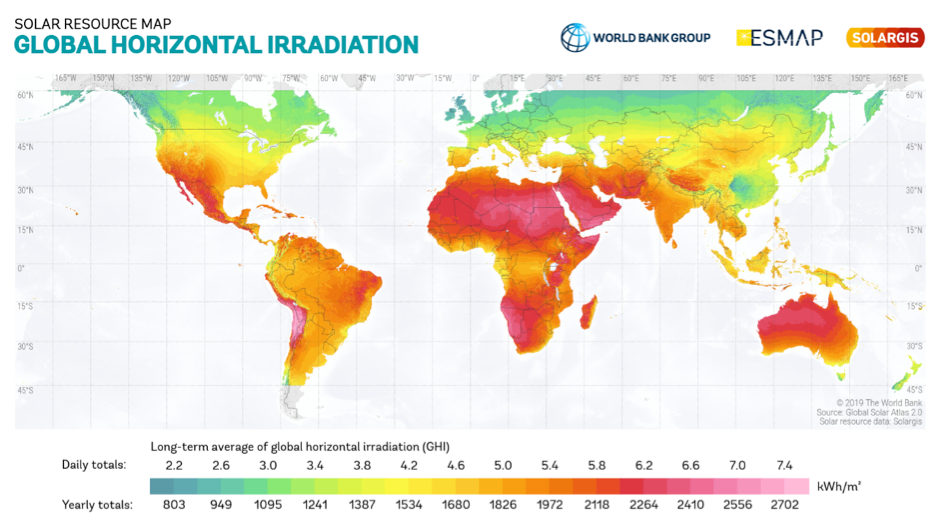
Source: solargis.com
Everywhere on the planet receives some sunlight for at least part of the year, so solar irradiation levels vary according to geographic location, time of day, seasons, weather, altitude, atmospheric conditions, and a variety of other factors. It is vital, therefore, to capture and distribute this energy as efficiently as possible.
The Middle East Solar Industry Association estimates the current solar power capacity in the Middle East and North Africa (MENA) region to be around 16 GW per annum and increasing every year. In development solar projects in the region will add over 25 GW of capacity in the next five years alone at a value of around US$15 billion.
Photovoltaic (PV) or Concentrated Solar Power (CSP)
The two most prominent technologies in solar power are photovoltaic and concentrated solar power; the former being the most common in the Middle East. Photovoltaic (PV) panels, such as those seen on roofs, make use of the sun’s light to generate electricity. The PV cells absorb the light which causes the electrons within them to flow, thereby creating an electric current. The current is then converted from direct current (DC) to alternating current (AC) so that it can be distributed to the end user. Large PV fields, such as the Mohammed bin Rashid Al Maktoum Solar Park in Dubai (below), generate several GW of electricity. However, the dispatchable nature and intermittent supply of energy from PV plants has led to storage and distribution challenges which the industry is striving to resolve.
"In development solar projects in MENA will add over 25 GW of capacity in the next five years alone at a value of around US$15 billion."
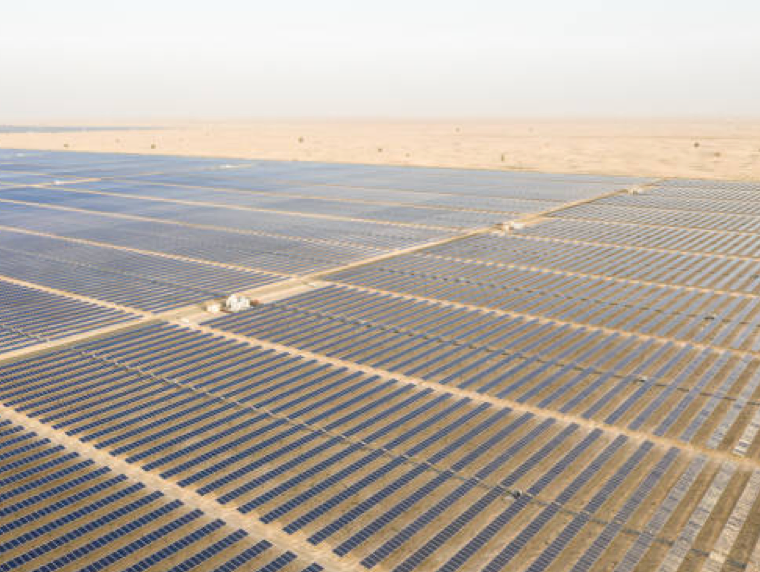
A PV field at the Mohammed bin Rashid Al Maktoum Solar Park in Dubai, UAE
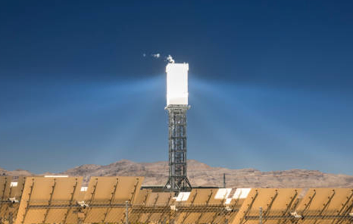
CSP Tower design plant, with mirrors arranged in circular fashion focussing the sun’s energy on the central tower.
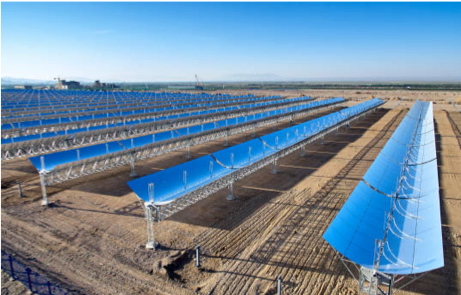
Non-tower CSP plant, with linear mirror arrangement. The sun’s energy is focused on the pipe in the middle of the mirror trough.

Louis-Florent Daspre
Senior Loss Adjuster, Natural Resources
louisflorent.daspre@charlestaylor.com
Expertise:
Onshore Oil & Gas, Downstream Refinery/Petrochemical Operations, Offshore Construction and Processing, Business Interruption, Construction/Erection All Risks, Power Generation & Utilities
Location:
Dubai

