
As Qatargas seeks to expand its already mighty LNG empire, the state-owned subsidiary of Qatar Petroleum is using best-in-class processes and world-leading technologies to help meet ever-increasing environmental demands.
Qatargas was established in 1984 after the discovery of the gigantic North Field gas reservoir in the Qatari region of the Persian Gulf. The North Field reservoir is the world’s largest non-associated natural gas field with what is believed to be 900 trillion Cubic Feet (TCF) of reserves. To harness those gas reserves Qatargas initially built three humble onshore LNG trains at Ras Laffan Industrial City, Al Khawr, each with a production capacity of 3.3 million tonnes per annum (MTPA).
Back in 2010, when I worked on the development of The Ichthys Project in Australia, it was considered, with 12.8 TCF of reserves, as a mega project and was linked to the LNG plant at Bladin Point near Darwin by just two LNG trains with a combined capacity of 8.9 MTPA. This pales in comparison to the Qatargas project ambitions!
Qatargas has grown rapidly since the 90s. Through numerous joint ventures with various oil majors, it has now built an impressive 14 LNG trains with a combined production capacity of 77 MTPA.
Lifting the ban
In April 2017, Qatar lifted their self-imposed ban on development of the North Field and began plans to increase its LNG production even further from 77 MTPA to 110 MTPA by the mid-2020s with the addition of four new mega LNG trains, each with a capacity of 8 MTPA.
While LNG is less polluting than oil and coal, Qatargas is under increasing pressure to think greener and come up with low carbon solutions in order to meet the strict climate targets Qatar signed up to as part of the 2015 Paris Agreement. So exactly how does Qatargas, the world’s third largest natural gas producer, plan to reduce its environmental impact in the LNG Value Chain?
The Jetty Boil-Off Gas (JBOG) Facility
LNG carriers ship natural gas in liquid form at a temperature of -162°C, close to its vaporisation temperature. While the tanks on an LNG carrier are designed to stay cool there is always slight evaporation of the LNG. This natural evaporation, known as boil-off, is unavoidable and has to be removed from the tanks in order to maintain the cargo tank pressure. Jetty Boil-Off Gas (JBOG) is generated during ship loading and had traditionally been flared at the loading berths. Flaring of JBOG is no longer a viable option under the current stringent environmental regulations.
Qatargas are said to have invested over US$1 billion in a boil-off gas recovery system, which came online in October 2014. The facility collects the boil-off gas from each LNG carrier that pulls up at its Ras Laffan export terminal and sends it, via a 60-inch header, to a central facility where it is compressed and used as fuel gas or reliquefied into LNG. The facility recovers more than 90% of the previously flared JBOG. In terms of reducing emissions of GHGs, the JBOG facility offsets approximately 1.6 million tonnes of CO2 per annum. Qatargas claims recovery of 29 billion standard cubic feet of gas per year: enough to power more than 300,000 homes.
- NOx emissions from the exhaust gas of gas turbines will be reduced by up to 40% through the application of enhanced dry low-emission technology.-
Carbon Capture and Sequestration Facility
In 2005, alongside the addition of three new LNG trains, Qatargas built a Carbon Capture and Sequestration Facility with a capacity of 2.1 million tons of CO2 per year at Ras Laffan. The plant sequesters Acid Gas, namely H2S and CO2, by-products of sweetening the Natural Gas, and uses Acid Gas Injection (AGI) technology to dispose of these waste gases. AGI basically compresses the Acid Gas to a sufficient pressure to achieve injection. The waste gases are then injected into a saline aquifer in an onshore reservoir formation.
While AGI technology and injection schemes have been around since the 80s, at the time it was built, this scheme was considered one of the world’s largest by volume. Now, as part of the North Field Expansion Project, Qatargas plans to integrate another 5 million tons of Carbon Capture and Storage at Ras Laffan to further reduce its CO2 and SO2 emissions.
For more on Carbon Capture and Storage see article “Going Underground: Carbon Capture and Storage – ‘Net Zero’ Fad or necessity for the Future?”
Investment in Renewable Energy
The addition of four new mega LNG trains and associated facilities will require vast amounts of additional power to run them. Here Qatargas are also looking at ways to go greener and plan to add more than 4,000 megawatts of solar power to its already sizeable portfolio by 2030 by purchasing an 800 megawatt solar power plant currently under construction in Al-Kharsaah, and a further 800 megawatt solar farm in the near future.
Wastewater Reduction and Reuse (WRR)
Increasing LNG production capacity means increased process water. Qatargas had been injecting their wastewater into re-injection wells at Ras Laffan but a new facility, started up in 2018, both reduces the volume being re-injected, and the volume of desalinated water being purchased from external sources. The facility employs conventional water treatment technology e.g. filters, de-oilers and advanced technology such as membrane bio-reactors and reverse osmosis and should conserve 10.7 million cubic meters of water per year by recovering 75% of the plant's treated water.
Reducing NOx Emissions
NOx emissions from the exhaust gas of gas turbines will be reduced by up to 40% through the application of enhanced dry low-emission technology. Qatargas has retrofitted this technology onto existing gas turbines and will implement on all new LNG trains. Dry low NOx combustion systems reduce NOx emission through tighter fuel control and thoroughly pre-mixing the natural gas fuel and air in the combustors.
Unprecedented scale
While none of these technologies are new, it is the sheer scale at which Qatargas are employing them that makes them so impressive, as well as a series of world-firsts.
Despite Covid-19 casting a shadow over the global LNG market, Qatargas has reported it is full steam ahead for the North Field Expansion Project. Undoubtedly one to watch over the next five years as we progress rapidly through the global Energy Transition.
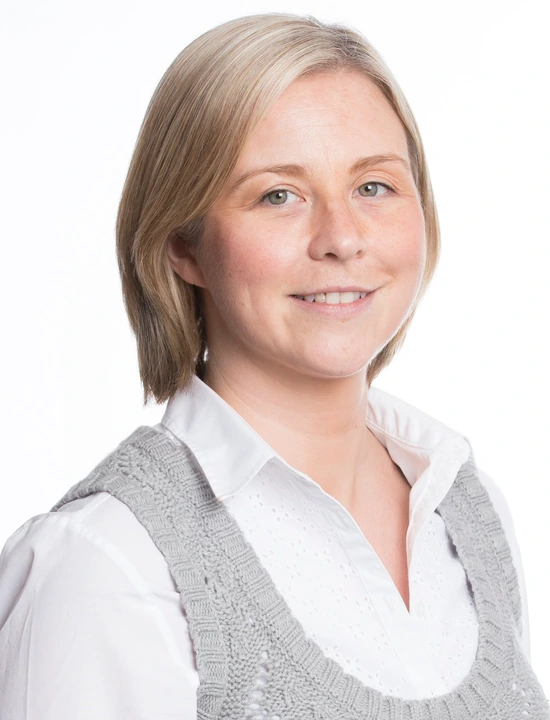
Eibhlin Marsh
Associate Director
eibhlin.marsh@charlestaylor.com
Expertise:
Process Engineer, Onshore and Offshore production facilities, Refinery and Petrochemical Operations, Renewable Energy, Construction & Operating Risks, DSU/BI, Natural Resources, Failure Investigation
Location:
London

