
The destruction wreaked on Ukraine by the Russian army has come at an incalculable cost to its people and its communities. While the war rages on, the country can’t yet think about rebuilding for the future. The insurance market will have an important role to play in supporting that work, but it currently faces huge challenges in adjusting the claims that are located in such a dangerous and deadly warzone.
The gold standard in loss adjusting has always revolved around
in-person site surveys and investigations. This remains the approach taken by Charles Taylor Adjusting in Ukraine and we’re the only foreign insurance services provider working on the ground in the country.
The logistics behind such onsite surveys are complicated given the ongoing fighting. For example, one claim involved a production facility that was about 100km from the front line and had been damaged by artillery. To get an adjuster onsite for just six hours, required a five-day trip and extensive planning to arrange safe travel and to meet the requisite security protocols. But in many cases, in-person access is simply impossible.
To overcome these issues and provide an effective service for clients, we’ve blended human expertise with technology and data-gathering techniques to create a robust approach to adjusting these losses remotely. We call it our layering process and it lets us build up a detailed and accurate picture of a loss, despite not being able to survey the site in person.
We developed it after being instructed on a loss at a production facility just outside the devastated city of Mariupol. The premises were abandoned in the early days of the war and the loss ran to hundreds of millions of pounds.
So just how did we go about assessing and quantifying the claim when it was impossible to get people onsite? This is the five-step approach we took and which we have since used in other losses.
- One – The first job was to get an accurate overview of the site and we did this by accessing high-quality satellite imagery of the premises. The only information required to secure such pictures is the exact latitude and longitude of the insured property. The images are inexpensive and provide the layout of the facility as well as giving an indication of the damage sustained. Taken from overhead, the images make it possible to see the condition of the roof and where it has been damaged by artillery strikes. This is not nearly enough information or detail to adjust the loss, but it’s a solid starting point.
- Two – The next step is to understand the function of each building, what they’re used for and what equipment each contains. We liaised with our insured to get detailed site plans, which set out the number of buildings and their exact location. We overlaid these onto the satellite images and this let us begin to get a better idea of how the facility worked at an operational level. Next, we got construction drawings from the plant owner. These gave additional details about the actual fabric of the buildings and the materials and techniques used in their construction.
- Three – Now we had a sound grasp of the physical properties of the buildings, we needed details of the plant, machinery and equipment inside, what it was all used for and where it was located.
This came from the insured’s asset register and let us understand the scale and scope of the contents in question. - Four – The challenge now was to determine how much damage had been done to the fabric of the buildings and the equipment they housed. This meant we had to understand the type of bombs and explosives that had hit the buildings and use this information to assess the power and nature of the blasts suffered by the premises and their contents. We worked with a former British Army explosives expert who was able to provide detailed information on the ordnance used, the properties of each and the explosion patterns they created over specific areas.
- Five – Now we knew where and what types of artillery had struck the insured facilities. We also understood their explosive capabilities and through our knowledge of the building’s fabric, could make accurate estimations of the likely damage caused. Similarly, the granular detail we had about where each and every piece of machinery was located, enabled us to calculate its state of repair. Our knowledge of the equipment also allowed us to assess not only the property damage involved, but also the likely lead time for replacements and the repair time for salvageable items. This was important to quantify the business interruption loss, even though repair and replacement is currently not possible.
The work we have done with this loss in Ukraine has proved that it’s possible to build up a clear and detailed picture of complex losses, even when in-person surveys and inspections are impossible. Our approach has also received industry recognition and we won the 2023 Insurance Times award for Third Party Claims Management Team of the Year.
The sophisticated nature of technology and the scale and scope of available data means that even without personal access, it’s possible to combine data gathering techniques with specialised human expertise to adjust major losses remotely.
In addition to claims arising from war-torn regions, our layering process has important applications for losses where there are health and safety concerns, such as following an incident at a nuclear or chemical facility, or in the immediate aftermath of an earthquake or volcano eruption where there are fears of future tremors or lava spills.
Our layering process has quickly established itself has an important part of our adjusting capabilities and is a technique that ensures we can provide our services in an accurate and reliable way, even when losses occur in the most demanding physical circumstances.
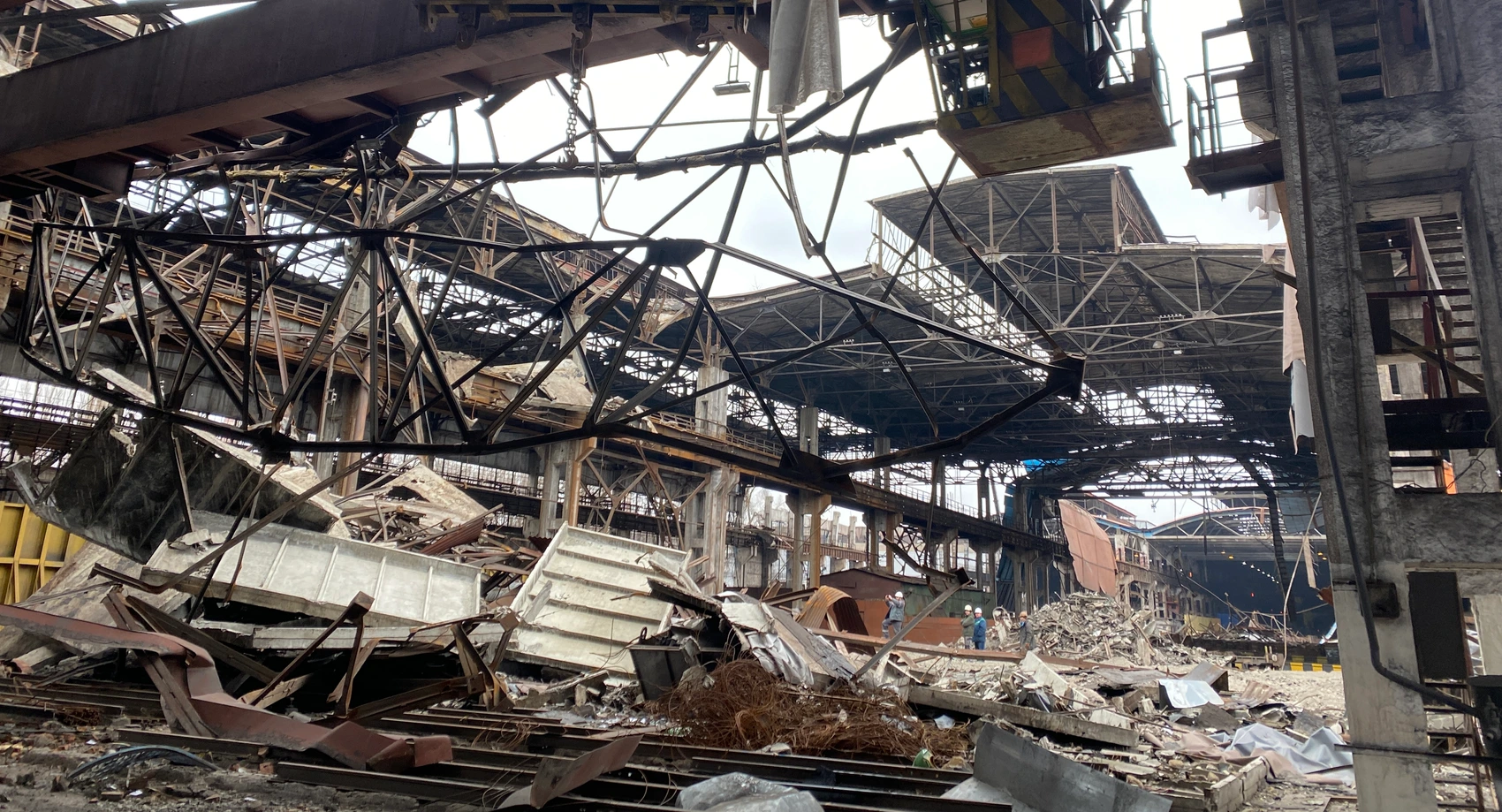
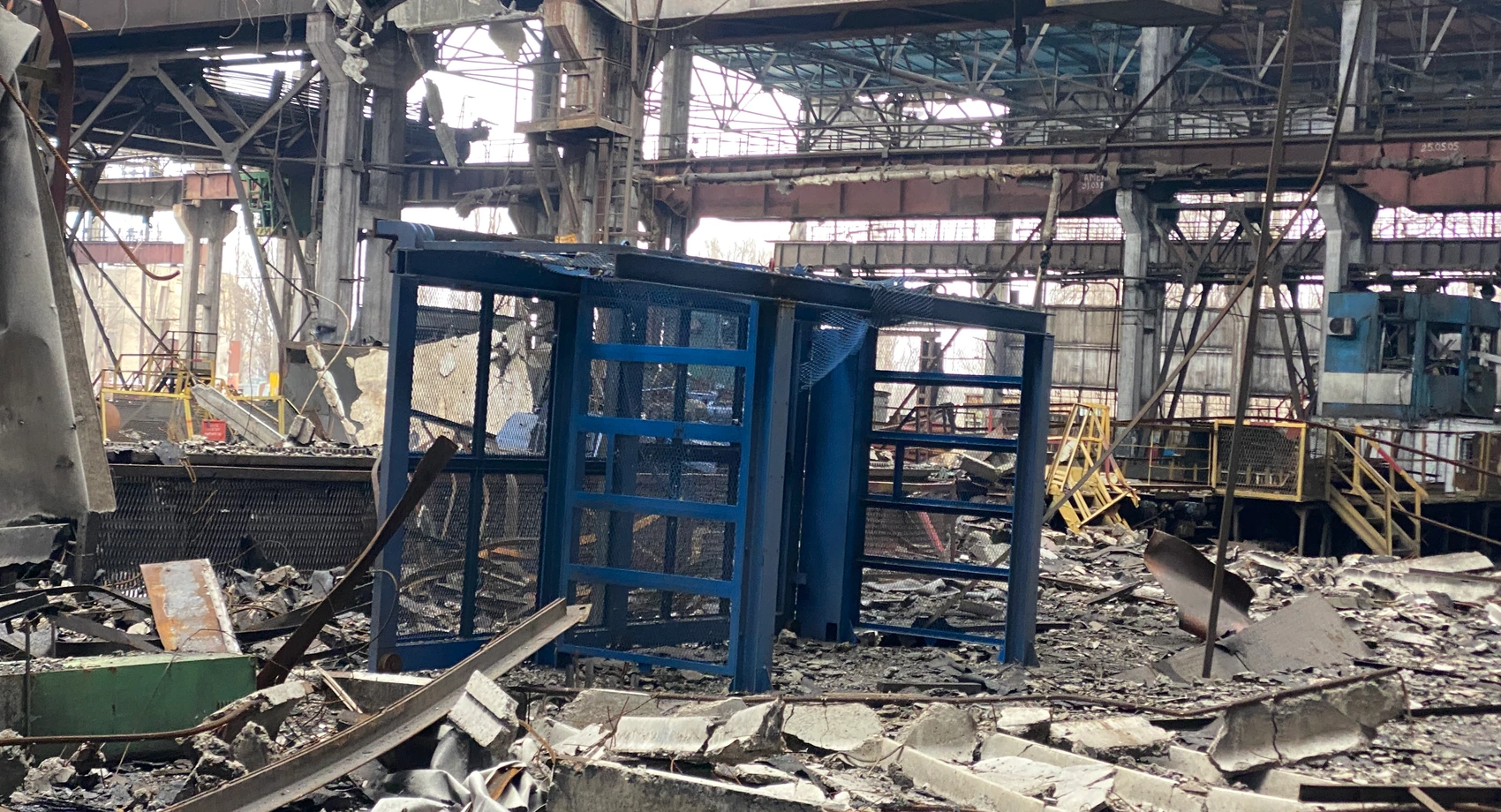
Triple missile strike on heavy industry plant in southern Ukraine, photos taken by the CTA adjuster who attended the site.

Hugh Sparks
Managing Director,
Onshore Energy & Mining - Natural Resources
hugh.sparks@charlestaylor.com

Shazia Rehman
Director, Natural Resources
shazia.rehman@charlestaylor.com

